2025 was the fifteenth year of The Big Sunflower Project. It was from my perspective a strange year as I broke my wrist at the end of March. As someone who uses their arms to compensate when their legs won’t work this was a problematic situation to find myself in.
I spent five weeks in plaster and a week in a splint. This was followed by physiotherapy sessions because immobilisation causes muscle weakness and joint stiffness — physiotherapy helps to counteract this damage and ensure a return to function, strength, and mobility. Then at the end of all that I received an osteoporosis diagnosis which explained the break but isn’t great for someone who has a tendency to fall, as the risk of breaking something is increased.
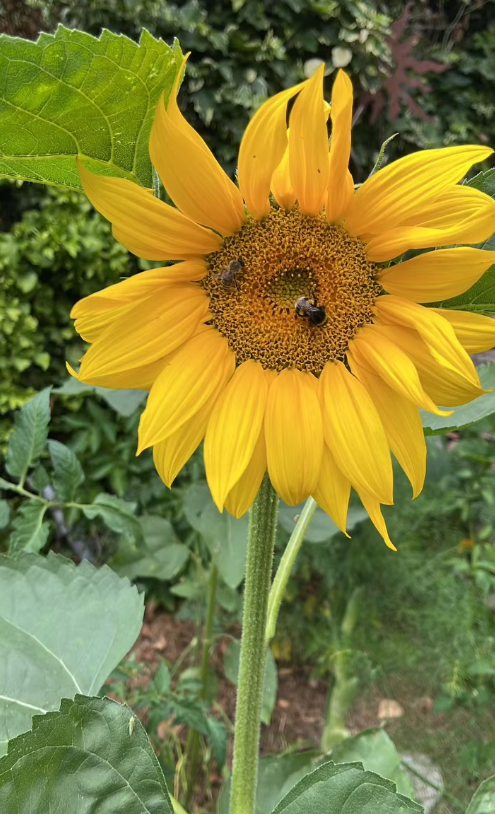
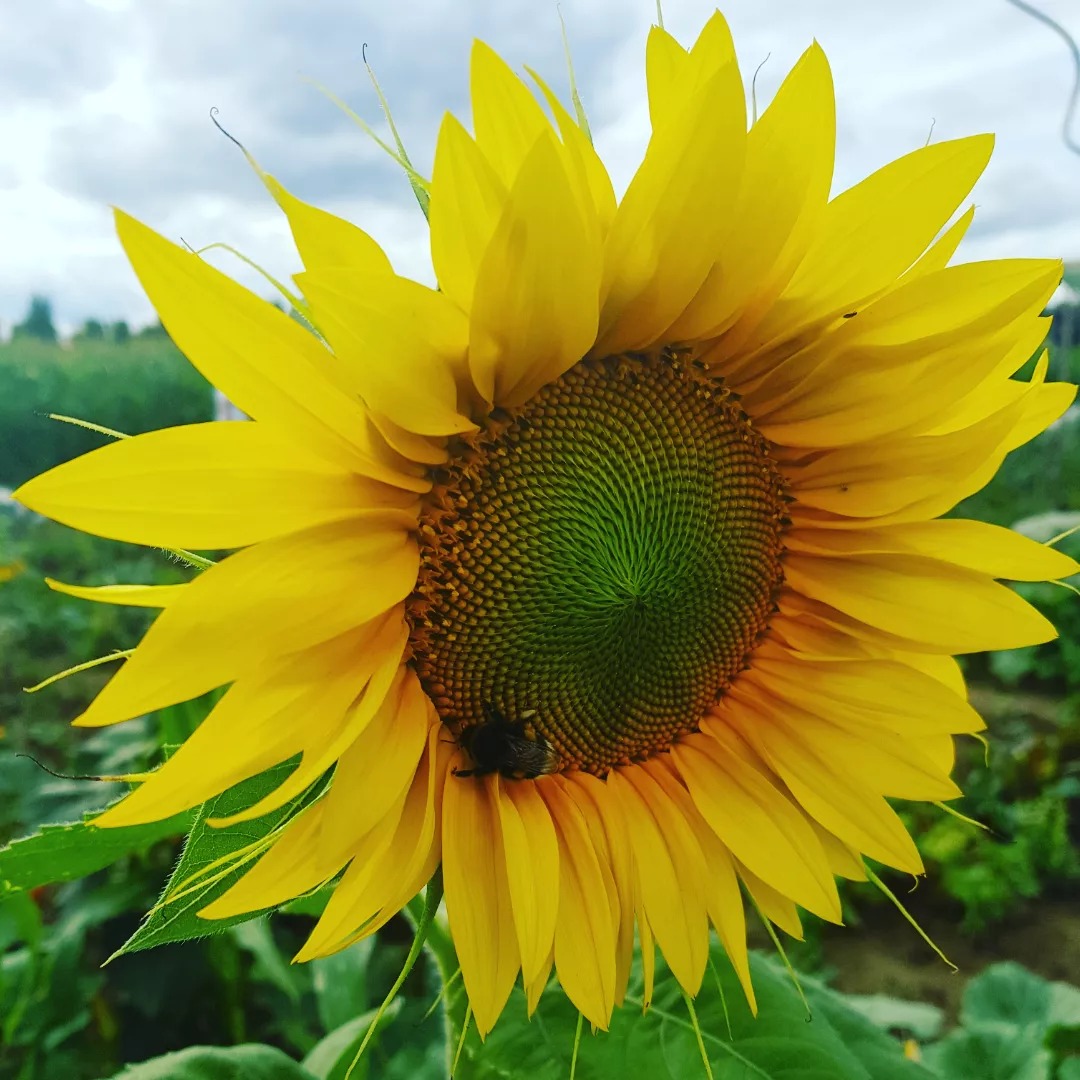
Much of my year has been focussed on getting better and making changes around my home to try and limit the opportunities for falling and breaking something else. I did however manage to grow some sunflowers and I was happy that other people once again grew sunflowers with me to raise awareness of centronuclear and myotubular myopathy. And the weather this year I am sure we can all agree was amazing, perfect weather for growing sunflowers, which is not something I get to say often.
Share your photos
If you grew sunflowers this summer but have not yet sent photos it is not too late. Photos can be sent by email or shared on Facebook, Twitter, Instagram and LinkedIn using #TheBigSunflowerProject.
Share a story
If you have grown sunflowers with the project this year and would be willing to share your story, please get in touch. Stories help the project raise awareness of centronuclear and myotubular myopathy and evidence the impact of the project. You can read stories from previous projects below.
After a sunflower has flowered, its seeds can be harvested for planting again the following year. A single seed planted in the spring can produce many seeds in the autumn and these can be extracted from the seed head once a sunflower has dried out.
If you have sunflowers that are now past their best, you can save the seeds for growing next summer or as food for wildlife over the winter. Firstly chop off the flower head and brush away the pollen, under which you will find your sunflower seeds, then leave the flower head to dry. You can learn more about harvesting sunflower seeds on the project website.
Although the project is now at end for this year in the UK, if you are in a part of the world that is about to get its summer, please consider buying a packet of seeds and growing a sunflower to raise awareness of centronuclear and myotubular myopathy.
And to everyone who has taken part in the project this year, a massive thank you. I look forward to growing sunflowers with you again in 2026, hopefully next year I will do it with all my bones intact.
Further information
Further information about the project can be found on here on the project website and on the project social media pages.
2024 was the fourteenth year of The Big Sunflower Project with people taking part in the UK, Germany, Hungary and Canada. Unsettled weather made for difficult growing conditions but many beautiful photos were still received and shared across social media, raising awareness of centronuclear and myotubular myopathy.
If you grew sunflowers this summer but have not yet sent photos it is not too late. Photos can be sent by email or shared on Facebook, Twitter, Instagram and LinkedIn using #TheBigSunflowerProject. And if you are in a part of the world about to get its summer please share your photos too.
Share a story
If you have grown sunflowers with the project this year and would be willing to share your story, please get in touch. Stories help the project raise awareness of centronuclear and myotubular myopathy and evidence the impact of the project. You can read stories from previous projects below.
After a sunflower has flowered, its seeds can be harvested for planting again the following year. A single seed planted in the spring can produce many seeds in the autumn and these can be extracted from the seed head once a sunflower has dried out.
If you have sunflowers that are now past their best, you can save the seeds for growing next summer or as food for wildlife over the winter. Firstly chop off the flower head and brush away the pollen, under which you will find your sunflower seeds, then leave the flower head to dry. You can learn more about harvesting sunflower seeds on the project website.
Although the project is now at end for this year in the UK, if you are in a part of the world that is about to get its summer, please consider buying a packet of seeds and growing a sunflower to raise awareness of centronuclear and myotubular myopathy.
And to everyone who has taken part in the project this year, a massive thank you. I look forward to growing sunflowers with you again in 2025.
Further information
Further information about the project can be found on here on the project website and on the project social media pages.
2023 was the thirteenth year of The Big Sunflower Project with people taking part in the UK, Germany and the USA. Possibly the greyest summer in the history of the project, in the UK at least, many beautiful photos were still received and shared across social media, raising awareness of centronuclear and myotubular myopathy.
If you grew sunflowers this summer but have not yet sent photos it is not too late. Photos can be sent by email or shared on Facebook, Twitter, Instagram and LinkedIn using #TheBigSunflowerProject.
Share a story
If you have grown sunflowers with the project this year and would be willing to share your story, please get in touch. Stories help the project raise awareness of centronuclear and myotubular myopathy and evidence the impact of the project. You can read stories from previous projects below.
After a sunflower has flowered, its seeds can be harvested for planting again the following year. A single seed planted in the spring can produce many seeds in the autumn and these can be extracted from the seed head once a sunflower has dried out.
If you have sunflowers that are now past their best, you can save the seeds for growing next summer or as food for wildlife over the winter. Firstly chop off the flower head and brush away the pollen, under which you will find your sunflower seeds, then leave the flower head to dry. You can learn more about harvesting sunflower seeds on the project website.
Although the project is now at end for this year in the UK, if you are in a part of the world that is about to get its summer, please consider buying a packet of seeds and growing a sunflower to raise awareness of centronuclear and myotubular myopathy.
And to everyone who has taken part in the project this year, a massive thank you. I look forward to growing sunflowers with you again in 2024.
Further information
Further information about the project can be found on here on the project website and on the project social media pages.
Rachael Hearn is a nursery teacher and fundraising coordinator at Quince Tree Day Nursery in Essex. Below she writes about why she grew a sunflower with children at the nursery.
We were doing a project at Quince Tree Day Nursery in Essex teaching the children about how things grow. We then decided to take part in a challenge to grow a sunflower and raise awareness about mental health which affects not just adults but children as well. The idea of the challenge was to grow a sunflower so that you learn how to nurture and look after something just like you should look after yourself.
We then came across The Big Sunflower Project that raises awareness about centronuclear and myotubular myopathy when looking up sunflower challenges on the internet to take part in for fundraising and thought it was a good idea to take part in this challenge as well so that we could teach the children how everyone is different and that’s ok.
We were so happy to watch our sunflower grow as it grew so big it was 9ft 2″ and it was sad when we had to dig it up but we managed to save the seeds that we found in the sunflower so that we can grow another one next year and take part in more sunflower challenges.
2022 was the twelfth year of The Big Sunflower Project with people taking part in the UK, Germany, Greece, Australia and the USA.
This year the project received a huge amount of support which began with a donation from Dynacure, a clinical-stage company focused on developing and commercialising novel therapies, to transform the lives of rare disease patients, with limited or no treatment options. As well as their generous funding, Dynacure also shared sunflower photos and stories on their social media pages, to help raise awareness of The Big Sunflower Project and of centronuclear and myotubular myopathy.
The project was featured in blog posts by Rare Revolution Magazine and Beacon For Rare Diseases.
As always many beautiful photos were received and these were shared across social media over the summer, raising awareness of the project and of centronuclear and myotubular myopathy. If you grew sunflowers this summer but have not yet sent photos it is not too late. Photos can be sent by email or shared on Facebook, Twitter, Instagram and LinkedIn using #TheBigSunflowerProject.
You can also share your sunflower growing story. Again, stories help the project raise awareness of centronuclear and myotubular myopathy and evidence the impact of the project. You can read stories from previous projects below.
If you have grown sunflowers with the project this year and would be willing to share your story, please get in touch.
After a sunflower has flowered, its seeds can be harvested for planting again the following year. A single seed planted in the spring can produce many seeds in the autumn and these can be extracted from the seed head once a sunflower has dried out. If you have sunflowers that are now past their best, you can save the seeds for growing next summer or as food for wildlife over the winter. Firstly chop off the flower head and brush away the pollen, under which you will find your sunflower seeds, then leave the flower head to dry. You can learn more about harvesting sunflower seeds on the project website.
Although the project is now at end for this year in the UK, if you are in a part of the world that is about to get its summer, please consider buying a packet of seeds and growing a sunflower to raise awareness of centronuclear and myotubular myopathy.
And to everyone who has taken part in the project this year, a massive thank you. I look forward to growing sunflowers with you again in 2023.
Further information
Further information about the project can be found on here on the project website and on the project social media pages.
This time last year, I called time on the The Big Sunflower Project with a heavy heart. My little awareness project had got huge and the demand for seeds, applying for funding and distributing seeds all by myself, was at times overwhelming. However, as 2021 got underway, people began to contact me to say they still wanted to take part in the project and they were happy to buy their own seeds or plant seeds they had harvested. I could not have been more happy.
2021 was the eleventh year of The Big Sunflower Project. Participants old and new joined the project and some truly beautiful photos were shared on social media to raise awareness of centronuclear and myotubular myopathy.
If you took part in the project this year, thank you so very much, I hope you enjoyed growing your sunflowers as much I enjoyed looking at your photos and being part of the project community of sunflower growers. To date participants have joined the project from across the UK, Ireland, the Isle of Man, the USA, Costa Rica, Argentina, the Philippines, Australia, New Zealand, Germany, The Netherlands, France, Croatia, Hungary, Sweden, Austria, Lithuania, Greece, Poland and in a first for the project this year, the Middle East.
Raising awareness
The aim of The Big Sunflower Project is to raise awareness of the rare neuromuscular conditions known as centronuclear and myotubular myopathy. One of the ways the project does this is by sharing photos, another by sharing participants stories on the project website and on social media. If you have grown sunflowers with the project this year and would be willing to share your story to help raise awareness of centronuclear and myotubular myopathy, please get in touch. You can read stories from past projects below.
If you grew sunflowers this summer but have not shared any photos it is not too late and these can still be shared on the project social media channels.
If you would like to learn about centronuclear and myotubular myopathy, you can read about the conditions below.
Could you grow a sunflower to raise awareness of centronuclear and myotubular myopathy? Taking part is easy.
1. Buy a packet of sunflower seeds.
2. Plant a seed in a sunny spot, water regularly and watch it grow.
3. Take a photo of your sunflower and share it on social media using #TheBigSunflowerProject.
If you have never grown a sunflower before but would like to give it a go, you can learn how below.
Want to learn more about The Big Sunflower Project? Further information about the project can be found on the project website and on the social media pages.
After almost 20 years, Toni Abram, founder of The Information Point and The Big Sunflower Project, will be stepping down from her roles at the end of this year. Below she writes about her work over the last twenty years and shares some of her favourite photos.
I established The Information Point in 2001 following my dad and I being diagnosed with centronuclear myopathy in 1998. Like so many with centronuclear and myotubular myopathy, the journey to diagnosis was not an easy one. I had seen three doctors over a period of ten years but my symptoms were mild and I went without a diagnosis until dad began to experience problems in his 50s.
I remember receiving the diagnosis felt overwhelming and lonely – we were told there were very few others in the world with our illness, nor was there a treatment. So, when I established The Information Point in 2001, the aim was to provide a website dedicated specifically to centronuclear and myotubular myopathy, where people could visit to find all the information they needed in one place, in the early days of diagnosis and beyond – helping others in their search for information; bringing those with the conditions together, whatever their age, whatever form of the conditions they had and wherever they may be in the world; and raising awareness of the conditions too.
Specific information about centronuclear and myotubular myopathy was posted on the website, together with information about other myopathies and news about centronuclear and myotubular myopathy from around the world. Areas for research news and resources were also developed, together with a ‘share a story‘ area for all forms of the condition, including unknown patterns of inheritance. And a newsletter, the predecessor to Our World, published stories of interest to the centronuclear and myotubular myopathy community, including a series of interviews titled All About Me which aimed to give people the opportunity to discuss their diagnosis and how they dealt with it, as well as the opportunity to talk about the things that made them, such as their favourite books, films and music; what their favourite childhood memory was; who most influenced their life and why. The interviews aimed to show that a disability didn’t have to define a person and that a person with a disability was still just a person.
Pages were set up on social media and an online shop was opened to raise funds for research also. Now maintained directly by the Myotubular Trust, rarely a day goes by where a donation isn’t received by someone shopping at the Myotubular Trust Easyfundraising eStore.
In 2012 the first Our World newsletter was published. It provided an opportunity to not only share the latest research and fundraising news but to give those with centronuclear and myotubular myopathy the opportunity to have their voice heard, by telling their stories, about their lives, their way – achievements, milestones, fundraising events and more, which today has led to an amazing resource for families in 2020 and beyond receiving a centronuclear or myotubular myopathy diagnosis.
The Big Sunflower Project first invited people to grow sunflowers in 2011. I have always loved the way that sunflowers grow to such dizzy heights, as if they are on a mission to touch the sky and nothing can hold them back. It occurred to me that many charity fundraising/awareness raising type projects involved people doing something physical – being sponsored to run, swim, climb or bicycle, something that even I, although ambulatory, would not be keen to do. However popping a seed in a pot and nurturing it for a few weeks was something most people could do, whatever their physical ability and that was very appealing to me, because it meant that those diagnosed with centronuclear and myotubular myopathy could take part too.
The idea was simple – give away sunflower seeds to raise awareness of centronuclear and myotubular myopathy and ask people to share photos of their sunflowers online. The project was only intended to last for one year but this year sunflowers were grown for the tenth summer.
Over the past ten years, 4,766 photos have been shared, all of which have been posted on social media to raise awareness of centronuclear and myotubular myopathy. Participants have joined the project from across the UK, Ireland, the Isle of Man, the USA, Costa Rica, Argentina, the Philippines, Australia, New Zealand, Germany, The Netherlands, France, Croatia, Hungary, Sweden, Austria, Lithuania, Greece and Poland.
As the project grew, around 300 packets of seeds were distributed each year, with seeds sent to those affected by centronuclear and myotubular myopathy, together with schools and nurseries, community groups, groups who work with disadvantaged people, hospices and youth groups to name a few, so as well as raising awareness of centronuclear and myotubular myopathy, the project supported the activities of these groups too. In 2019 the project was nominated as a Community Hero as part of the UK Government Department for Digital, Culture, Media and Sport (DCMS) Local Charities Day.
Run from my home, in my spare time, neither The Information Point or The Big Sunflower Project had charitable status and I came to describe them as voluntary, non profit organisations, with charitable aims, run at a grassroots level, when needing to explain what they did. As such neither group received any regular funding, rather funding was sought as and when required, all of which was ploughed back into the work of the groups. On one occasion The Big Sunflower Project undertook a crowdfunding project and on other occasions competitions were entered – success with the Galaxy Hot Chocolate Fund and the Skipton Building Society Grassroots Giving initiatives ensured that enough money was incoming to cover running costs. Banks, supermarkets and more assisted with financial donations and other organisations donated their products, services, time and expertise.
Deserving of a particular mention are Net-work Internet who in 2006 began sponsoring The Information Point and have provided the web hosting and domain name at no charge ever since. Also Extravision, who provided The Information Point with their email marketing service free of charge for many years, meaning Our World could be sent quickly, easily and professionally. All the companies who provided sunflower seeds at no charge or with large discounts, helping make the most of limited resources; the lovely sunflower growers who so kindly took the time to harvest their seeds and donate these to the project and all the individuals who donated money that kept things ticking over. You all rock and The Information Point and The Big Sunflower Project would never have happened without you.
Working on The Information Point and The Big Sunflower Project has been an incredible experience. I have learned so much and it has been a joy getting to know so many people from the centronuclear and myotubular myopathy community in the process. Deciding to step back hasn’t been an easy decision but the time to focus on other things in my life has come … at least for the time being.
It is said that it takes a village to raise a child but I believe it could also be said that it takes a village to achieve everything that has been achieved within the centronuclear and myotubular myopathy community over the last 20 years too – from little known rare conditions to clinical trials is no mean feat.
There are now many wonderful big hearted people working behind the scenes, making many wonderful things happen for the community worldwide – people who understand only too well what it means to live with a diagnosis of centronuclear and myotubular myopathy, because their own family is, or has been impacted by the conditions and who I know will appreciate any support you can offer in the years to come. So please, do what can, when you can, if you can, to support them; continue to share your stories; be kind to one another … and if you see a sunflower, please think of me.
2020 was the tenth year of The Big Sunflower Project with people taking part in the UK, the Netherlands, France, Germany, Poland, Sweden, Greece, the USA, Australia and the Philippines.
As always schools and nurseries received seeds. Other recipients included home educating families, children learning from home due to coronavirus, schools that remained open to the children of key workers, NHS hospitals and medical centres, brownies, a horticultural society, a charity that supports people recovering from homelessness and addiction, an allotment project for children and adults with additional support needs, a charity which works with people who have learning disabilities and a residential home for older people with dementia. This year seeds and small plants were also given away in our local neighbourhood to spread a little happiness during a time in which happiness has been in short supply.
Project map
This year 251 places were plotted on the project map which can be seen below – click a sunflower to learn more about the people growing sunflowers in that location.
In the news
The project received some lovely publicity over the last twelve months which can be read below and we are incredibly grateful to those who have taken the time to write about what we do.
We are also grateful to all the Clinical Commissioning Groups that promoted the project to their staff and on social media at the beginning of the year.
The Blakemore Foundation
In August, we were delighted to learn that we were to receive a £100 donation from the Blakemore Foundation, a charitable trust established by the Blakemore family to support good causes across A.F. Blakemore’s trading area (including the SPAR trading area.) Funding such as this is crucial to the work of The Information Point and The Big Sunflower Project, so we are hugely grateful to the Blakemore Foundation for their support.
Photos
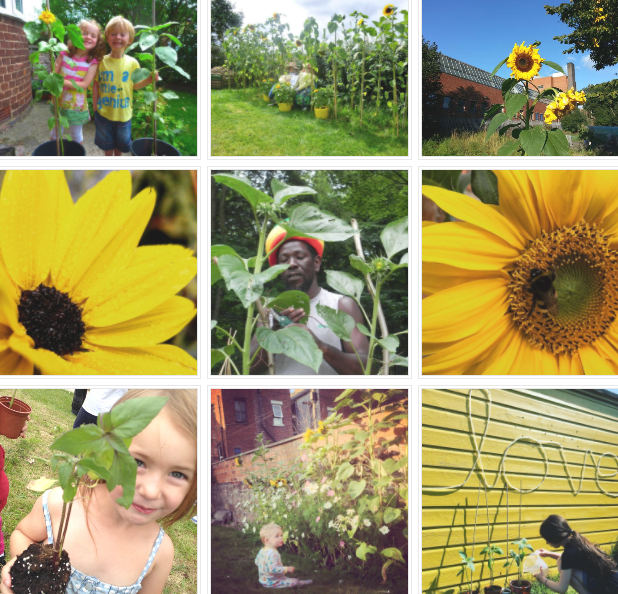
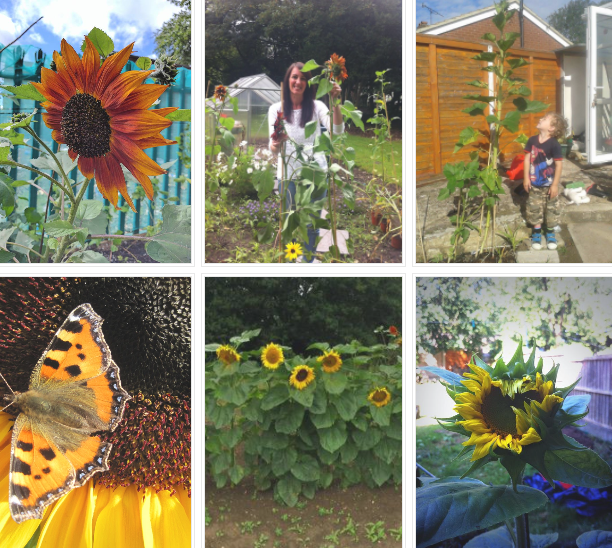
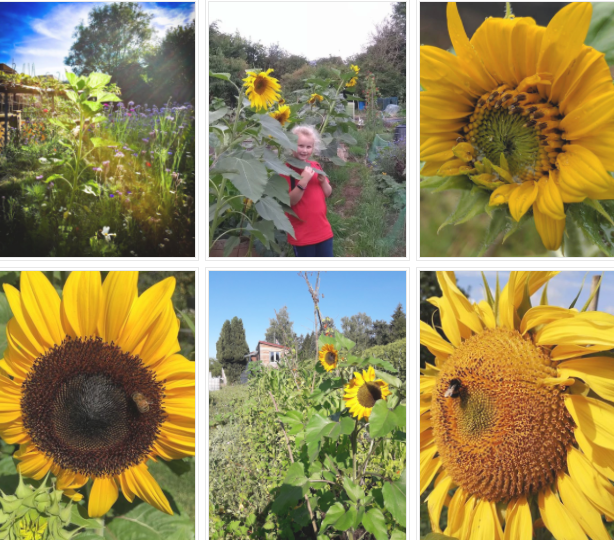
Over 750 photos were received from 69 participants this year. Every photo received was posted on social media to raise awareness of centronuclear and myotubular myopathy and these can be viewed below.
All photos received are shared on our website and social media pages and are really important to us, as they help raise awareness of the project and of centronuclear and myotubular myopathy. They also help evidence the impact of our work.
If you grew sunflowers this summer but have not yet sent photos it is not too late and we would still love to see these. Photos can be sent by email or shared on Facebook, Twitter or Instagram using #TheBigSunflowerProject.
Harvesting sunflower seeds
After a sunflower has flowered, its seeds can be harvested for planting again the following year. A single seed planted in the spring can produce many seeds in the autumn and these can be extracted from the seed head once a sunflower has dried out. Want to try saving your own seeds? You can learn how here on the project website.
Each year we ask people who have taken part in The Big Sunflower Project to share their story. The stories help us to raise awareness of centronuclear and myotubular myopathy and again help when we apply for funding. You can read stories from previous projects below.
If you have grown sunflowers with the project this year and would be willing to write your story too, please get in touch.
This year the project celebrated its 10th anniversary – it has been a very different year to the one anticipated but we hope if you took part, you enjoyed growing your sunflowers and that they brought a little sunshine into the lives of those who grew the sunflowers and those who saw the photos.
Further information
Further information about the project can be found on here on the project website and on the project social media pages.
2020 is the tenth year of The Big Sunflower Project and a milestone event for the little project, which originally was only meant to last for one year.
Obviously, no one expected the coronavirus situation and in March seed distribution was suspended. We tentatively re-started in April and during late April and early May, were able to get some final batches of seeds safely in the post. Recipients included children currently home from school, schools that remained open to the children of key workers, a charity that supports people recovering from homelessness and addiction, a specialist worker for the Early Help and Prevention Service, an allotment project for children and adults with additional support needs, Enable Scotland (a charity which works with people who have learning disabilities), a residential home for older people with dementia and a hospital caring for a child with myotubular myopathy.
Our intention at the beginning of the year had been to distribute 300 packets of seeds and we now know of over 290 people participating in the UK, on the Isle of Man, France, Greece, Germany, Sweden, Australia and the Philippines, so we are feeling a tiny bit proud of ourselves for getting so close to our target at this difficult time. 238 places are currently plotted on the project map which can be viewed below. Click anywhere on the map to open it up and click a sunflower to learn about the people growing sunflowers in a particular location. If you are growing sunflowers but cannot see yourself on the map, please ask to be added. As always, we wholeheartedly welcome anyone who grows sunflowers to take part in the project, even if they did not obtain their sunflower seeds from us.
In addition to posting seeds out, seeing as we had been thrown a curve ball, we decided to do a few things differently this year too.
Earlier in the year the project received a large donation of vegetable seeds. During the first three months of the year, these were sent together with sunflower seeds, to anyone who applied to the project and advised they had an allotment or stated they wanted seeds for a gardening club but from late April onwards, we began to give away our sunflower and vegetable seeds locally and we planted dwarf sunflowers, peas, cucumbers and runner beans and gave small plants away too.
Secondly, we decided to send seeds to schools we knew were still open for the children of key workers. We thought being a small person with all this chaos going on right now, together with not being able to be with your friends and watching your parents go off to work each day must be quite a scary time, so decided to send a few surprise packages to schools, in the hope it would bring some cheer, make the children feel a bit special and give them something to look forward to – hopefully staff and parents would get some enjoyment from seeing the sunflowers too. It has been very lovely to hear from some of the schools and other recipients that the seeds and plants have been well received
ZNM-Zusammenstark! e.v.
This year the project is once again being joined by ZNM-Zusammenstark! e.v. growing sunflowers in memory of Emil, who was diagnosed with myotubular myopathy and sadly passed away in 2016. Founded in 2015, ZNM-Zusammenstark! e.v. is a German association for those affected by centronuclear and myotubular myopathy. Visit their website to read what they have to say about being part of The Big Sunflower Project.
The project has received some lovely publicity this year which can be read below and we are incredibly grateful to those who have taken the time to write about what we do.
If you are using your sunflower seeds for educational purposes, fundraising events or would like to raise awareness of centronuclear and myotubular myopathy at the place where you are growing your sunflowers, you can download flyers from the resources area of the website. You will also find resources for teaching children and to start conversations about equality and diversity.
The Big Sunflower Project is an initiative of The Information Point for Centronuclear and Myotubular Myopathy. The aim of the project is to raise awareness of the rare neuromuscular conditions known as centronuclear and myotubular myopathy, by sending seeds to people who have never heard of the conditions and requesting photos in return, which are shared in the Information Point newsletter and on the project social media pages, again raising awareness of centronuclear and myotubular myopathy. There is no charge for project seeds or the cost of postage, the project does however, welcome donations to ensure the future of the project and to enable seeds to be sent to as many people as possible each year. If you have donated for your seeds, thank you. If you would like to donate, you can learn more about how to do this below.
This year project seeds have been donated by Thompson and Morgan and Tamar Organics. Seeds were also donated by Mike Rogers, Linda Fowler and Flower Power Lymo who grew sunflowers during the 2019 project and saved their seeds.
We are also grateful to everyone who has donated to The Big Sunflower Project since 2011, enabling us to celebrate our 10th anniversary. You can read about these people below.
Looking forward to seeing everyone’s sunflower photos over the summer. Until then stay safe everyone.
Further information
Further information about the project can be found on The Big Sunflower Project website and on social media, where photos can be shared using #TheBigSunflowerProject. Use #centronuclear, #centronuclearmyopathy, #myotubular and #myotubularmyopathy to help raise awareness of centronuclear and myotubular myopathy too.
Seed distribution for The Big Sunflower Project will begin again in early 2020, which will be the tenth year of the project.
The Big Sunflower Project is an initiative of The Information Point for Centronuclear and Myotubular Myopathy which aims to provide information about and raise awareness of these rare neuromuscular conditions. The project raises awareness by sending sunflower seeds to people who have never heard of centronuclear and myotubular myopathy and by sharing participants photos online.
300 packets of seeds containing 50 seeds will be distributed in 2020 (one packet of seeds per applicant.) Project seeds are sent free of charge to participants but anyone wanting to make a donation for their seeds can do so via this website.
Donations are ploughed back into the project – they enable the project to send more seeds to more people and help secure the future of the project.
The Big Sunflower Project is not associated with any freebie websites. Please do not share information about the project with these organisations. The project does not have the capacity to deal with the number of requests generated by being advertised on these websites and if featured, it will force seed distribution to stop.
Anyone is welcome to apply for seeds but priority is given to families affected by centronuclear and myotubular myopathy, community groups and good causes. Previously, seeds have been donated to schools and nurseries, community groups, groups who work with disadvantaged people, hospices and youth groups to name a few, so as well as raising awareness of centronuclear and myotubular myopathy, the project supports the activities of these groups too.
Kindness was definitely the motivation in sending the seeds. I can only imagine what it must be like to be a small person with all this chaos going on right now and on top of that, not being able to be with your friends and watching your parents go off to work too. So, I decided to send a few surprise packages to schools that I learned were still open, in the hope it might make them feel a bit special and give them something to look forward to. Hopefully staff and parents will get some enjoyment from seeing the sunflowers too.
Photos submitted to the project are shared on the project social media pages (Facebook, Flickr, Instagram, Twitter, LinkedIn) and in The Information Point newsletter Our World. Photos are also sometimes used in applications for grants and funding, without which the project could not continue.
It is only possible to send seeds to the UK and Europe but the project wholeheartedly welcomes participation from anyone who wants to raise awareness of centronuclear and myotubular myopathy by growing a sunflower and people who buy their own seeds are welcome to join in (if you would like to do this, please get in touch advising where you will be growing your sunflowers, so you can be included on the project map.)




















 The Big Sunflower Project
You must be logged in to post a comment.